5 Reasons to Convince Your Clients to Switch to Framer
Published: August 22, 2022 | Updated: February 24, 2024 | 5 min read
As a designer or developer, convincing clients to adopt new tools can be challenging. However, Framer has emerged as a game-changing platform that bridges the gap between design and development, offering compelling advantages that are hard to ignore. Here are five powerful reasons to help your clients make the switch.
1. Design to Production in Record Time

Gone are the days of lengthy handoffs between design and development teams. Framer eliminates this bottleneck entirely by allowing you to design and publish from the same platform. What used to take weeks can now happen in days, or even hours.
Your clients save money on development costs while getting their websites live faster. The visual editor is intuitive enough for designers, yet powerful enough to create production-ready websites without writing a single line of code. For clients who need to move quickly in competitive markets, this speed advantage can be the difference between leading and following.
2. True Responsiveness Without Compromise

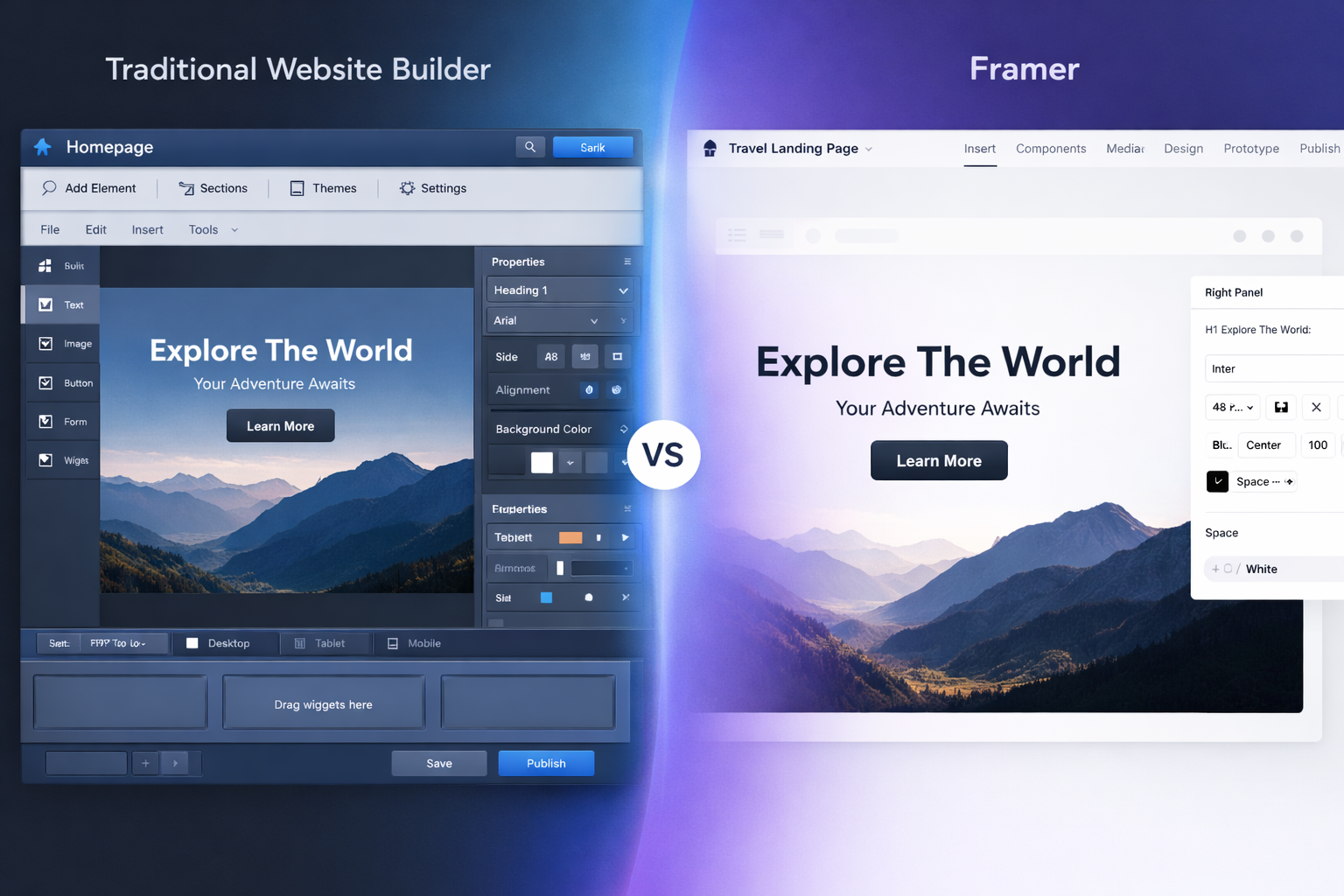
Responsive design is no longer optional, and Framer treats it as a first-class feature. Unlike traditional website builders that simply stack elements on smaller screens, Framer gives you granular control over every breakpoint.
You can create truly custom experiences for mobile, tablet, and desktop users, ensuring that your client's brand looks impeccable regardless of how visitors access their site. The platform's layout tools make it simple to adjust spacing, typography, and component behavior for each screen size, resulting in websites that feel native to every device.
3. Performance That Google Loves

In today's digital landscape, website performance directly impacts business results. Slow sites lose visitors, rank poorly in search engines, and ultimately cost clients money. Framer is built on modern web technologies that prioritize speed.
Sites built with Framer automatically benefit from code splitting, optimized asset delivery, and fast server response times. This translates to better SEO rankings, improved user engagement, and higher conversion rates. When you show clients their Framer site's performance scores compared to their current platform, the numbers speak for themselves.
4. Real Interactivity and Animations Made Simple
[Image: A before/after comparison showing a static website element on the left and the same element with smooth, engaging animations on the right, with Framer's animation timeline visible]
What sets exceptional websites apart from average ones? It's often the subtle interactions and animations that make experiences feel polished and engaging. Framer makes creating these interactions surprisingly accessible.
Without touching code, you can add scroll-based animations, hover effects, page transitions, and interactive components that would typically require a developer. These aren't just decorative flourishes; they guide users, provide feedback, and create memorable brand experiences. Your clients get websites that feel premium and modern without premium development costs.
5. Built-in CMS and Scalability
[Image: Framer's CMS interface showing a clean, organized content management system with various content types, fields, and a preview of how content appears on the live site]
Many clients worry about being locked into a platform or struggling to manage content after launch. Framer addresses both concerns elegantly with its integrated CMS and scalable architecture.
The CMS is designed for non-technical users, allowing your clients or their team members to update content, add blog posts, and manage products without your constant involvement. As their business grows, Framer scales with them, supporting everything from simple landing pages to complex web applications. This means the platform you choose today won't become a limitation tomorrow.
Making the Switch: What to Expect
[Image: A simple three-step visual timeline showing: 1) Planning & Design, 2) Building in Framer, 3) Launch & Optimize, with icons representing each phase]
Transitioning to Framer is straightforward. Most projects can be migrated in phases, starting with new pages or sections before eventually moving the entire site. The learning curve is gentle, especially for those familiar with modern design tools, and Framer's extensive template library and community resources make getting started even easier.
For clients hesitant about change, consider starting with a smaller project or a specific section of their website. Once they experience the speed, flexibility, and results Framer delivers, expanding becomes an easy decision.
The Bottom Line
Framer isn't just another website builder; it's a complete paradigm shift in how we approach web design and development. By combining design freedom, development power, and business practicality, it offers a compelling value proposition that resonates with clients who care about results.
The next time a client asks why they should switch, show them what's possible. Build them a quick prototype, demonstrate the speed of updates, or compare performance metrics. Framer's advantages become undeniable when experienced firsthand.
[Closing Image: A confident designer presenting a beautiful Framer website to impressed clients in a modern office setting, with the website visible on a large screen]
Ready to start your next project in Framer? The platform offers a free plan to get started, making it risk-free to explore its capabilities.